
Disclosure: This article contains affiliate links. We may receive a commission from qualifying purchases at no extra cost to you.
Can You Really Build a WordPress Website Without Coding?
Yes. You don’t need to understand HTML, CSS or programming to create a basic WordPress website.
Modern WordPress tools allow beginners to build pages, insert images, create navigation menus and publish content using a visual editor.
Whether you’re starting a personal blog, portfolio, small business website or online project, you can create a functional website without hiring a developer.
This guide explains the process using WordPress.com, which combines website creation tools and hosting in one service.
Step 1: Decide What Your Website Will Do
Before choosing a design or purchasing a domain, decide what you want your website to achieve.
For example, you might want to:
- Publish articles about a specialist topic.
- Promote a local business.
- Create a professional portfolio.
- Share tutorials and educational resources.
- Build an affiliate marketing website.
- Eventually sell products or services.
Having a clear purpose makes it easier to choose your website’s structure and content.
For your first website, keep the plan simple.
A homepage, About page, Contact page and a small collection of useful articles are often enough to get started.
Step 2: Choose Your WordPress Platform
There are two common ways to build a WordPress website.
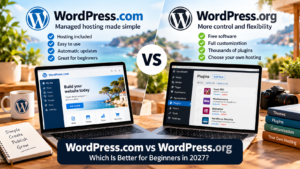
With WordPress.com, hosting and the WordPress software are provided together.
Alternatively, you can install the open-source WordPress software on a separate hosting service.
For beginners who prefer fewer technical decisions, WordPress.com offers a convenient starting point.
Its free plan allows you to explore website building before committing to a paid subscription.
[Explore WordPress.com — INSERT AUTOMATTIC AFFILIATE LINK]
If you’re unsure which approach suits you, read our guide to WordPress.com vs WordPress.org.
[INTERNAL LINK: WordPress.com vs WordPress.org: Which Is Better for Beginners?]
Step 3: Choose a Domain Name
Your domain name is the address visitors type into their browsers.
For example, a website about home gardening might use a name such as mygardenjournal.com.
When choosing a domain, aim for something that is:
- Easy to spell.
- Short enough to remember.
- Relevant to your website or brand.
- Suitable for long-term use.
Avoid complicated spellings and unnecessary hyphens.
WordPress.com provides a free subdomain when you start, while paid plans allow you to use a custom domain.
Eligible annual plans may also include a domain registration for the first year. Check renewal charges before purchasing.
Step 4: Select a WordPress Theme
A theme controls the visual appearance of your website.
It influences typography, page layouts, spacing, colours and other design elements.
WordPress offers a wide variety of themes suitable for blogs, businesses and portfolios.
For a beginner, look for a theme with:
- A clean, readable design.
- Good mobile responsiveness.
- Simple navigation.
- Appropriate layouts for your content.
- Ongoing maintenance and support.
Avoid choosing a theme solely because it has elaborate animations or unusual effects.
A straightforward website that’s easy to navigate is usually more useful than a complicated design.
Step 5: Create Your Essential Pages
Before publishing dozens of articles, create a small collection of essential pages.
Homepage
Your homepage should explain what your website offers and help visitors find the most useful content.
Use a clear headline, a short introduction and links to important pages.
About page
Explain who the website is for, what it covers and why visitors might find it helpful.
You don’t need a lengthy personal biography.
Contact page
Provide an appropriate way for visitors to get in touch, such as a contact form or dedicated email address.
Privacy policy
If your website collects personal information or uses analytics, advertising or other tracking technologies, make sure you provide the appropriate privacy information and consent mechanisms where required.
Affiliate websites should also include clear disclosures explaining commercial relationships.
Step 6: Write and Publish Your First Article
WordPress uses a block editor, allowing you to create content using separate blocks for paragraphs, headings, images, lists and other elements.
To create an article:
- Open your WordPress dashboard.
- Navigate to Posts and select the option to add a new post.
- Enter a descriptive title.
- Write your introduction and main content.
- Add headings to organize the article.
- Include useful images where appropriate.
- Preview the page on desktop and mobile.
- Publish when you’re satisfied.
Your first article doesn’t need to be perfect.
It should answer a real question clearly and provide useful information to your intended audience.
Step 7: Make Your Website Easier to Find on Google
Search engine optimization, commonly called SEO, helps search engines understand your content.
You don’t need to become an SEO expert before launching a website.
Start with a few fundamentals.
Choose a specific topic
An article about “how to create a photography portfolio website” has a clearer audience than one simply titled “websites.”
Specific topics can also help smaller websites establish topical relevance.
Use descriptive headings
Organize your article logically, using headings that explain what each section covers.
Write useful page titles
Your title should accurately describe the content and give readers a reason to visit.
Add internal links
Link related articles together so visitors can explore your website.
Use descriptive image text
When images convey useful information, provide appropriate alternative text.
Remember that SEO is a long-term process. Publishing a website doesn’t guarantee immediate search traffic.
Step 8: Check Your Website on Mobile
Many visitors will view your website on a phone.
Before launching, check that:
- Text is readable without zooming.
- Menus work correctly.
- Images display properly.
- Buttons are easy to tap.
- Important information is easy to find.
Test the website yourself rather than assuming the desktop preview represents every device.
Step 9: Launch and Maintain Your Website
Once your essential pages are ready, you can share your website.
You might promote it through social media, email, relevant communities or other suitable channels.
After launching, continue publishing helpful content and reviewing existing pages.
WordPress.com manages many underlying hosting and maintenance tasks, although you should still review your content, installed plugins and account settings regularly.
How Much Does It Cost to Start a WordPress Website?
The cost depends on your requirements.
WordPress.com offers a free starting option, while paid plans provide additional capabilities.
A self-hosted website generally requires paid hosting and may involve separate costs for domain registration, premium themes, plugins or maintenance.
Compare the full renewal costs rather than looking only at introductory offers.
For a first website, avoid purchasing unnecessary upgrades before you understand what your project needs.
Frequently Asked Questions
Can a complete beginner use WordPress?
Yes. WordPress provides visual editing tools and themes that allow beginners to create websites without programming.
Do I need separate hosting for WordPress.com?
No. Hosting is included with WordPress.com.
Can I add plugins later?
Yes. WordPress.com supports plugin installation on its paid plans, subject to compatibility restrictions.
How long does it take to build a website?
A basic website can be created relatively quickly, but preparing useful content, refining the design and checking legal requirements may take considerably longer.
Can I change my WordPress theme later?
Yes. However, changing themes can affect layouts and appearance, so review your pages after making changes.
Can I earn money from my website?
Potentially. Websites can support various monetization methods, but eligibility depends on the platform, plan, relevant programme rules and the quality of your content and audience.
Final Thoughts: Start Simple and Improve as You Go
Creating your first WordPress website doesn’t have to be complicated.
Start by choosing a clear purpose, selecting a suitable platform and building a handful of useful pages.
Then focus on publishing content that genuinely helps your visitors.
If you’d prefer an all-in-one approach without arranging separate hosting, WordPress.com is a sensible option to investigate.
Click here to create your WordPress website
Check current plan features, pricing and terms before making a purchase.